
#7 A Small Miracle


Cher compagnon de voyage,
You know that sad little tub of vanilla ice cream I thought I was doomed to eat as soup? Well, this morning I took it out of the frig, expecting a slightly sad, watery disappointment. Instead—pure delight. This stuff is thick, luxurious, and almost exactly like uncooked vanilla sponge cake batter: light, airy, creamy, eggy, and absolutely bursting with real vanilla bean specks and flavour.
I had a sudden brainwave.
I made my big mug of strong black coffee and dolloped about eight dessertspoons on top.

I cannot fully explain what happened next. But I will say this: it may be the single greatest travel discovery I have ever made.
The first sip of coffee through ice cream made me laugh out loud. Slightly sweet, silky, ridiculously comforting vanilla-coffee heaven. I actually said ‘oh my god‘ out loud to the empty kitchen—and then licked the ice-cream moustache off my lip. I floated upstairs on a cloud of vanilla joy.
The photo is of my second cup. I may never go back to ordinary milk again—although let’s be honest, we can’t get heavy ice cream like this at home. Can we?
Paris, you magnificent, over-delivering charmer — even my frig disasters are turning into the loveliest little miracles.
Fortified—or transformed, frankly—I showered, shampooed and set off. Not down the hill this time, but around it.


Avenue Junot, Villa Léandre, the long, civilised curve of Rue Caulaincourt—this was all laid out later, once Montmartre had been ‘discovered‘.. When Haussmann carved up central Paris in the 19th century, the people he displaced came up here, and the hill became a rough, makeshift slum—the maquis. Then, in the early 20th century, developers arrived, cleared it out, and put in streets like this.


No stairs. Not one. Just a slow, winding drift around the shoulder of the hill. Love the gardens they plant in their teeny parks.
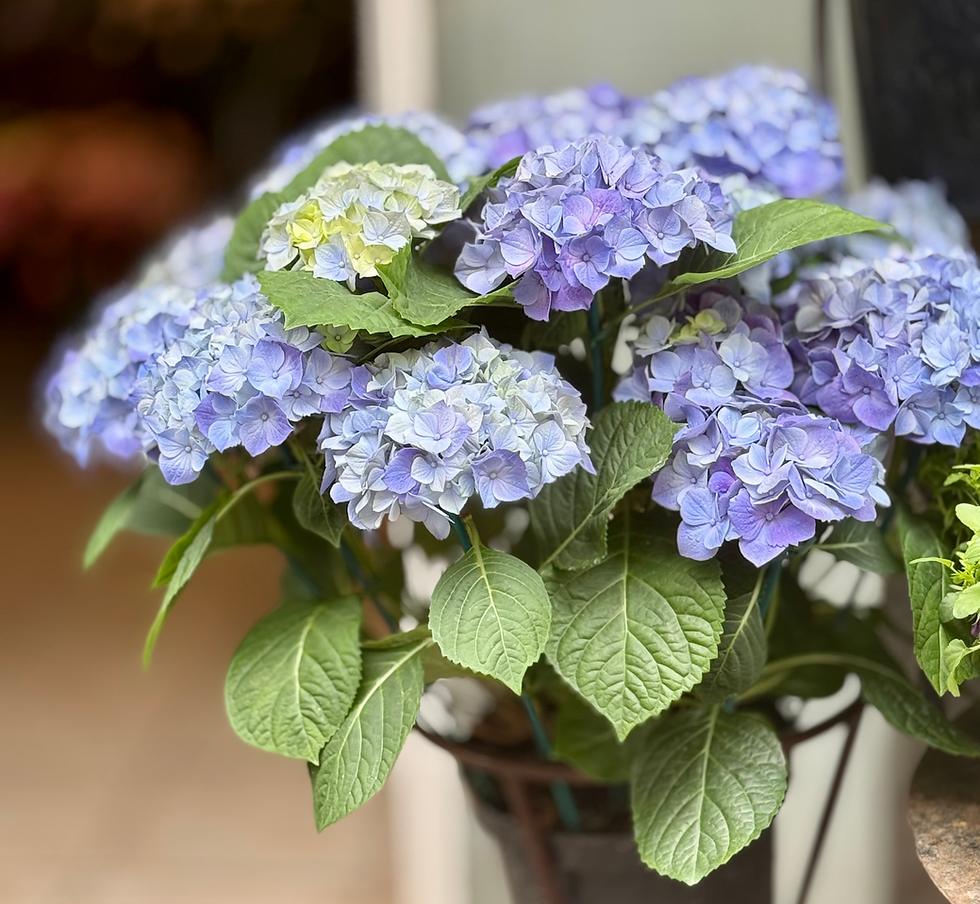
I stopped to admire all the shops. The fruiterers, the boulangers, the fleuristes, the fromageries. See those tiny little cheeses in the paper cornets? I didn‘t buy any because I was on my way to lunch, but I keep wondering what they were.
I stopped at a chemist because I am, at present, lacking illumination.
The illuminateur for my pommettes did not make the journey—the bottle was too heavy—and I am now wandering Paris with unlit cheeks, which isn’t helping my situation. I also attempted to find a water-miscible oil for my skin, which is behaving as though it was air-freighted separately. I failed at both.

Then on to lunch at a.lea—named for both its chef-owner, Léa, and the word ‘aléas’, those small uncertainties that make life interesting. The Michelin Guide calls it the quintessence of the new ‘bistronomic’ movement. The building is unassuming—but in Paris that usually means the food might be very good indeed. It has a 4.9 rating on Google.
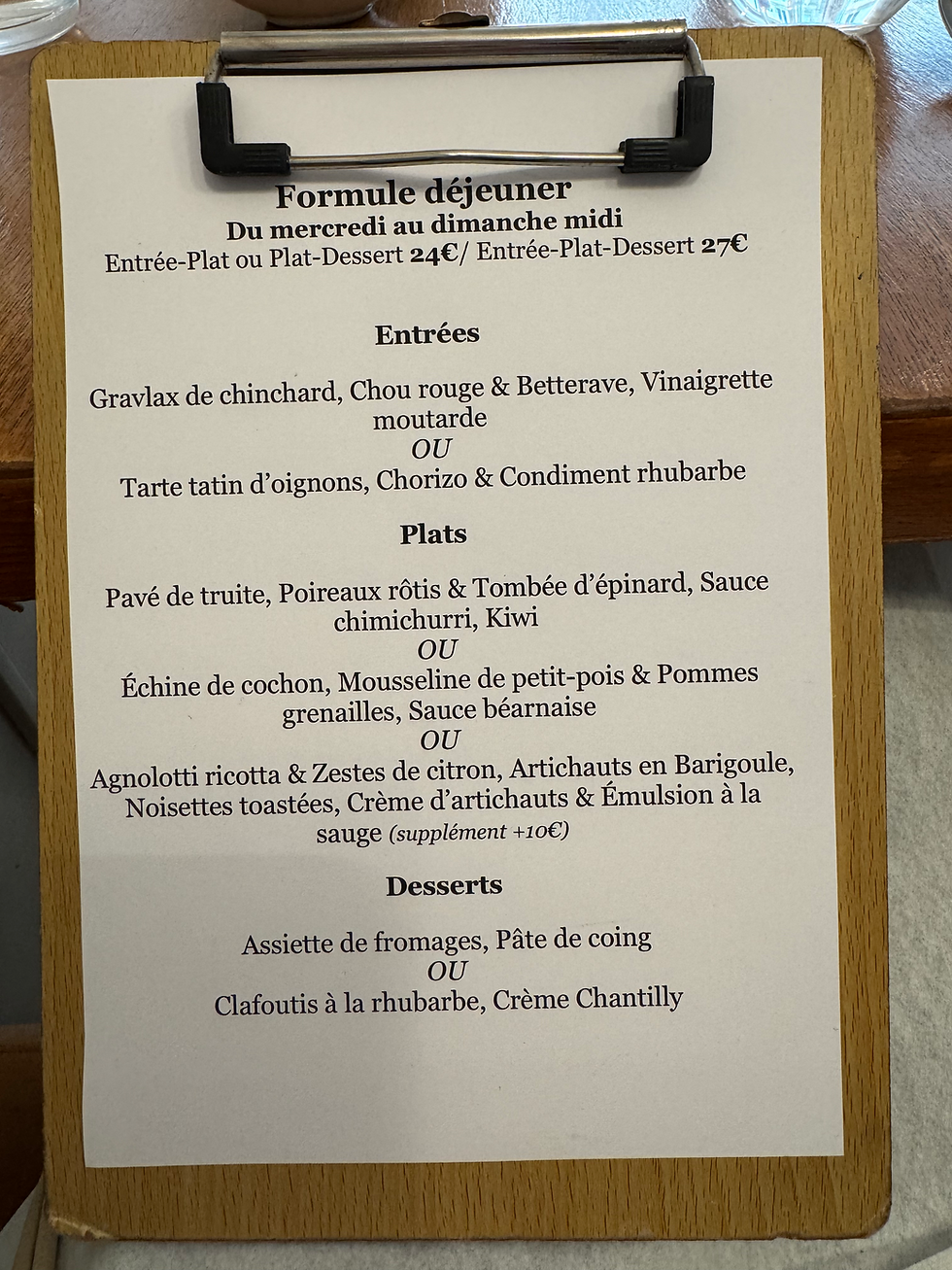
I chose the three-course formule déjeuner.
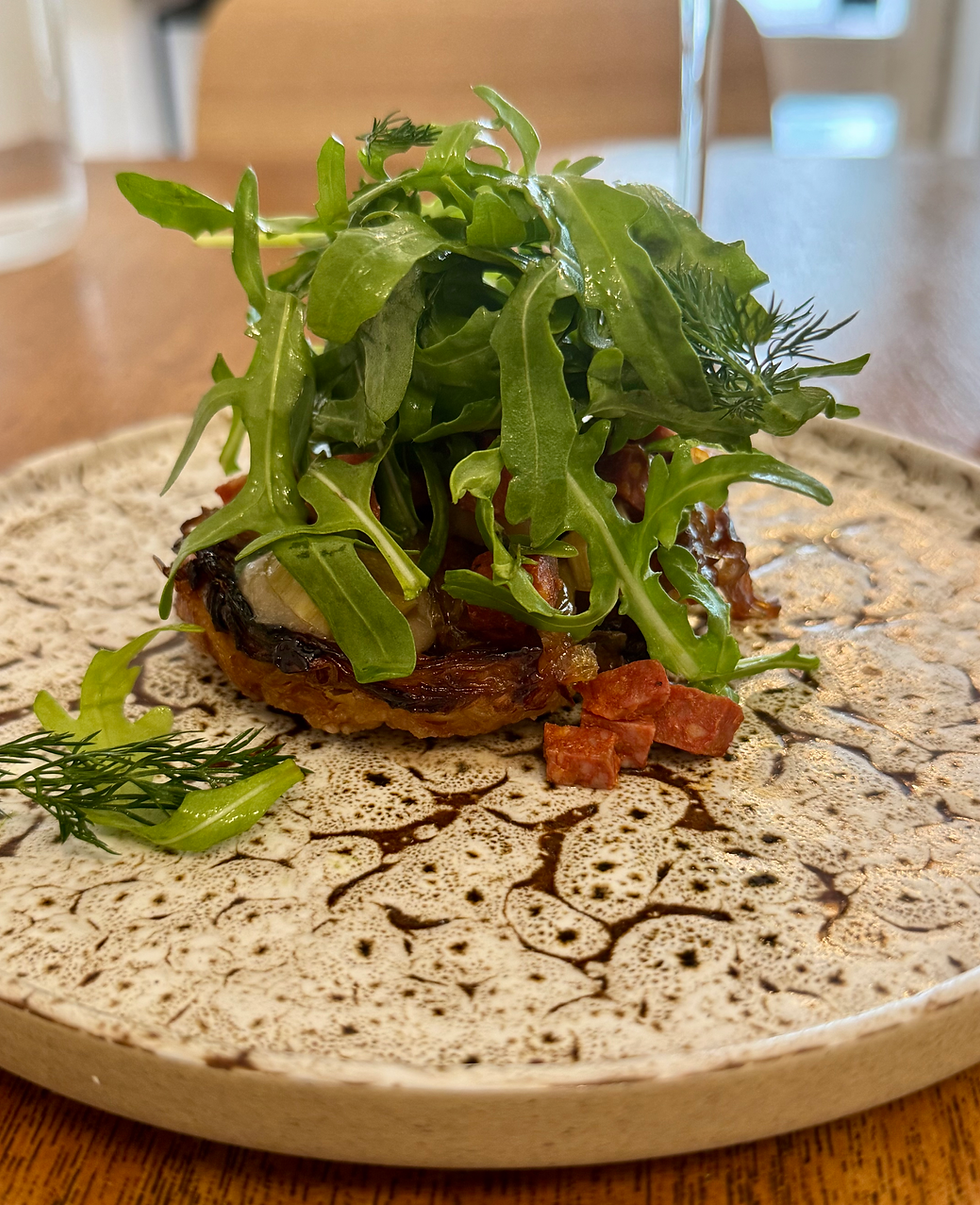
A small champagne first, with gravlax of mackerel. Beautifully presented.

Then shoulder of pig, as the French say—which sounds rustic, but had clearly been to finishing school—très tender.

Then rhubarb clafoutis and chantilly cream. Yum.

One satisfied diner!
William—my waiter, who the Michelin Guide notes is also a chef, and clearly a man with standards—brought me a taste of a white wine for the pork—my request—which was so dry it startled me. I didn’t think that was possible. He clocked my expression instantly and replaced it with something just a touch softer. Perfect.
The restaurant was full.
Assuming the food is good, my theory is that at a restaurant or even in a home, what we are really tasting is not just the food. It’s the room and the company. If every table is filled, if people are being turned away at the door, you feel you have chosen well. And the food tastes better.
Empty room, same food—I wonder is that a slightly different story?
Anyway, today, the three dishes were very enjoyable, but they didn’t quite tip into memorable. But I salute these young teams taking on the world. What courage.

The evening menu is more elaborate, and, as you‘d expect, more expensive.
I declined coffee—nothing could match this morning—and instead chose to walk back up the butte.

One gloriously soaring flight of stairs, then a sadistic stretch of road, then another flight so steep it must be in a different postcode. I took a little rest at each landing—tempted to just plop down cross-legged like the two pros already chilling there, but my hips refused.
So instead of conquering the mountain, I basically negotiated a ceasefire with it. And if I say so myself… I stared it down.

During lunch I booked a ticket to the Musée de Montmartre and I am now about to visit it—right after my phone—definitely not me, perish the thought—finishes its recovery from this morning’s photographic exertions. My portable power bank, the absolute drama queen, has chosen this exact moment to give up the will to live.
I’ll report back.
If I don’t, assume I’ve achieved terminal velocity on the grass in Renoir’s garden and am photosynthesising.
Later:

I have restored my chlorophyll.
The museum is on the same block as the vineyard, so I am three steps away. The gardens are lovely and the café a charming place to sit and contemplate the world. The museum has a conglomeration of buildings, and it seems to attract very few visitors. You can stand where you like, for as long as you like, and look properly.

The main exhibition building—the one where the artists worked—is in the garden. Three floors, and the bottom one tells the story of the hill itself. They have amazing photos that demostrate exactly how rough it was, and how basic the shelters people threw up.

Montmartre was never easy to get around. The road up was brutal—carts overturning, horses struggling, everything coated in white dust from the gypsum mines—for plaster—underneath. The mining tunnels collapsed from time to time.

When the displaced poor came up here, the hill filled with makeshift housing and became the maquis, or slum.
And into that came the painters. Except they didn't live in slum shanties exactly. They came for the cheap rent, fresh air, and light. Pierre-Auguste Renoir and the others in the 1870s—when the Sacré-Coeur was begun, then later the cabarets, the nightlife, and the next wave—Pablo Picasso and his lot in the early 20th century.


My favourite part was the recreated studio of Suzanne Valadon—remember Toulouse Lautrec‘s portrait of her yesterday? It's in the actual room, with panelled glass roof and vast window, light, space—it felt so real rather than a display. This is a photo of her with her son Maurice Utrillo, and her partner painter André Utter.

This is part of a special exhibition of the works of husband and wife team Adya & Otto van Rees.
I also managed to send one of the attendants quietly mad. First I tried to enter the main exhibition through the wrong door. He shook his head and pointed in the direction I should go. Then I couldn’t find the way out. Then I asked where Valadon’s studio was. Then, having taken my photos, I went to the other building only to discover he had shifted camp there—so of course again I couldn’t find her studio, or the exit.

I finished off the day with a wander around to Place du Tertre to watch the artists, and then down, down, down, the hill behind the basilica.

Then up, up, up. Those tulips are so worth it!
I passed an old man who was leaning against the stone wall of St Vincent's cemetery—obviously in need of a rest. I smiled at him and mimed that I was puffed too. He smiled back. A moment of communion. As always, I wait you—Paris isn’t finished with us yet! And we ain‘t finished with Paris! I might just dream of icecream coffee...
